Research
Accretion and jets from stellar-mass to supermassive black holes
I study how matter falls onto black holes, neutron stars and white dwarfs, and how part of that energy is launched back out as jets and winds. Combining radio, infrared, optical, ultraviolet and X-ray observations with modelling, I test whether the same physics holds across the full range of black hole mass.
Across the spectrum
The observatories on the ground and in space that my work draws on, from long radio waves to X-rays.
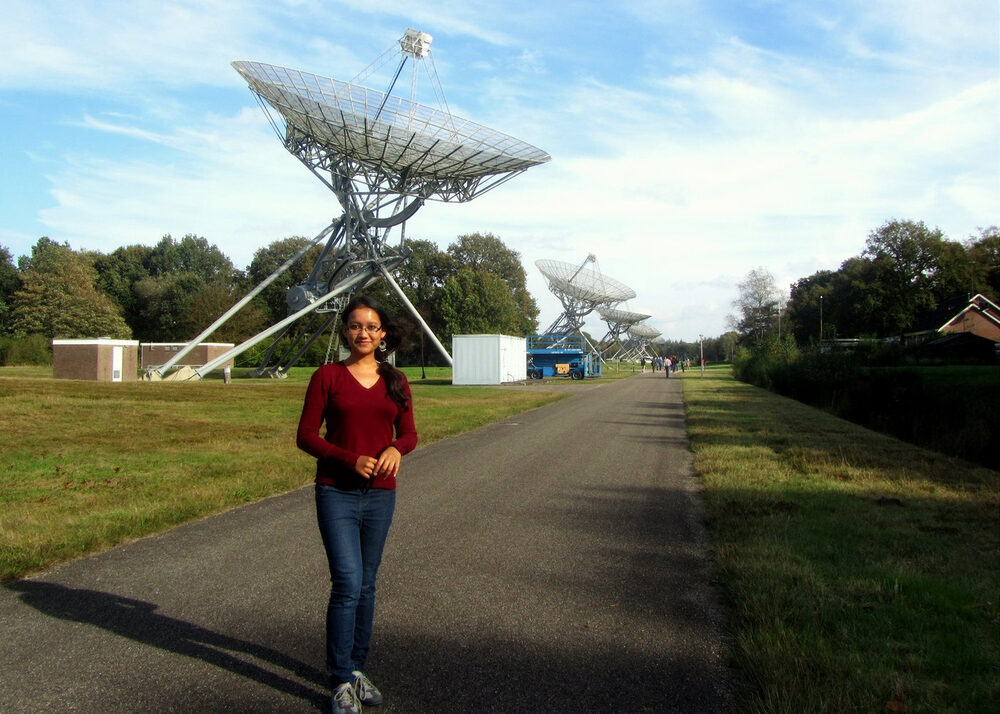
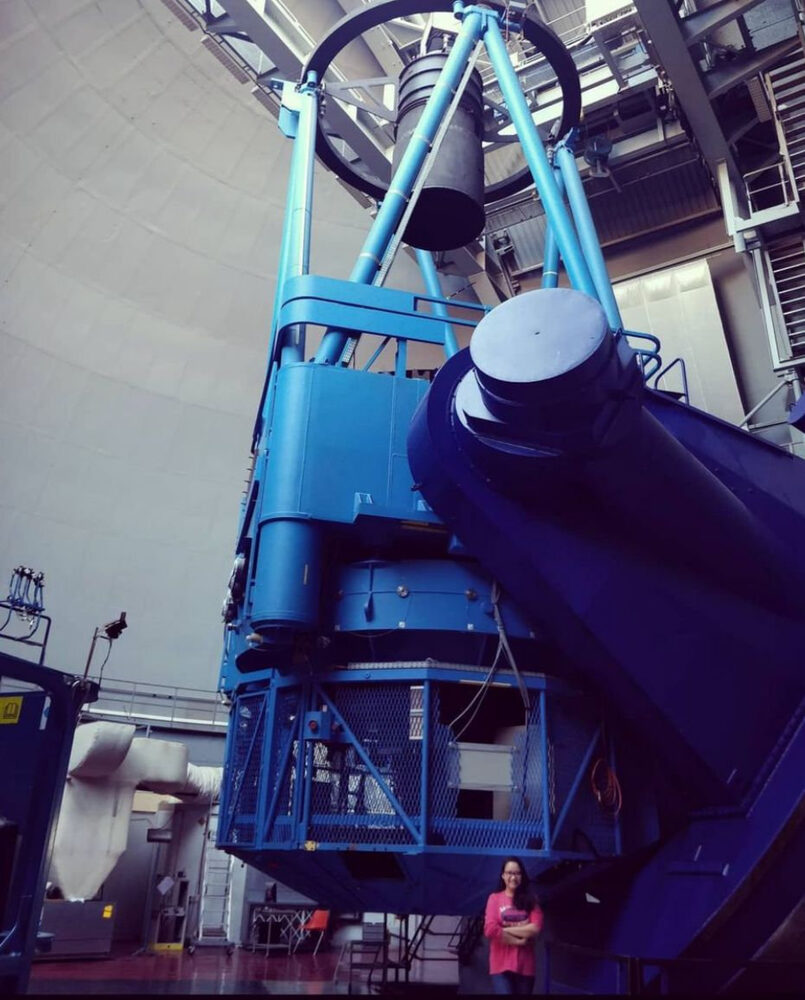
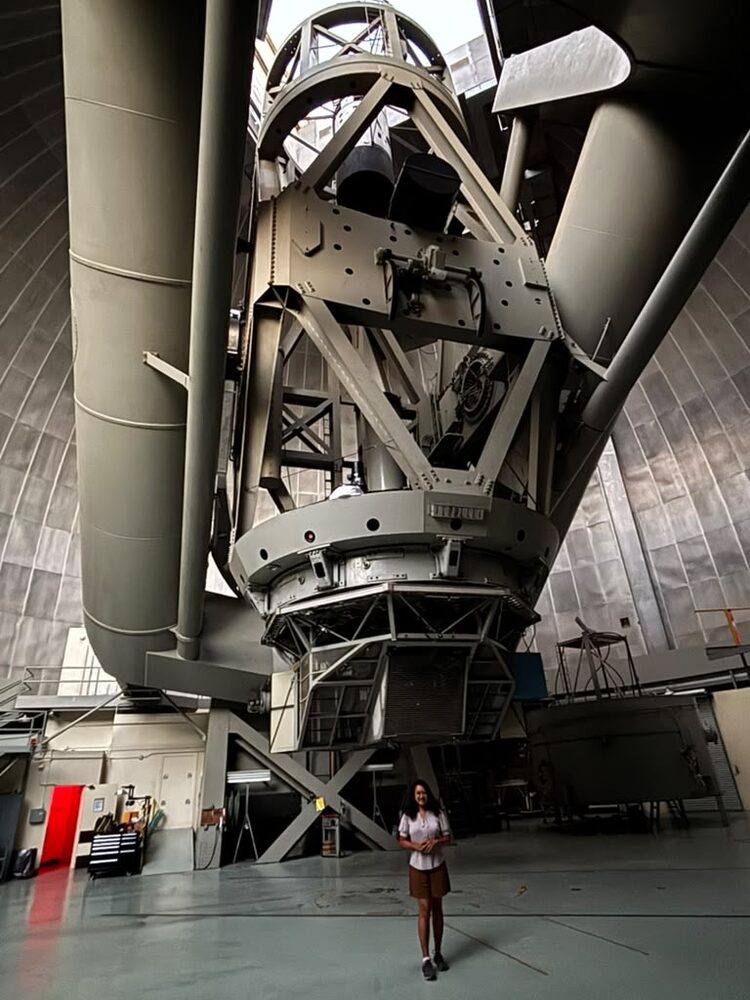
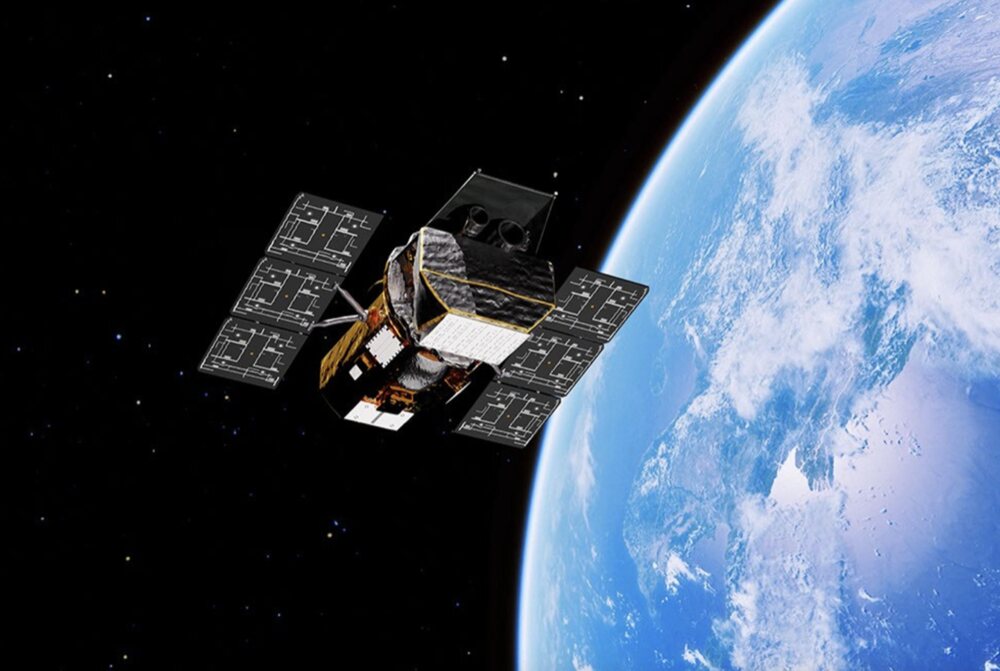
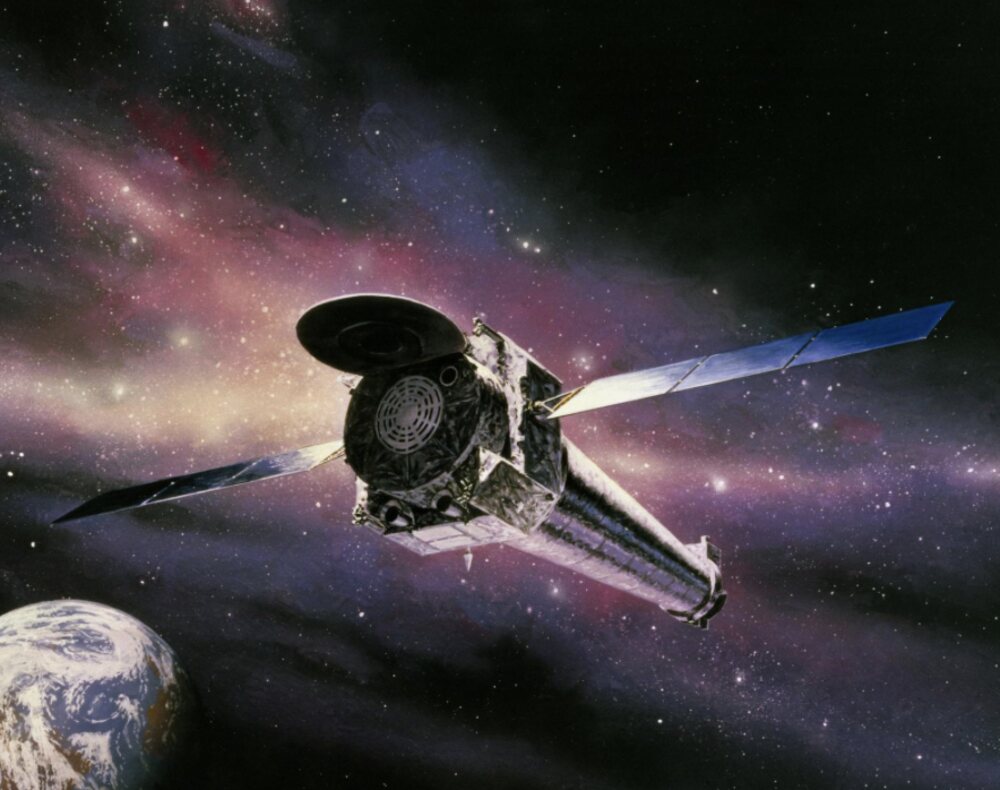
Radio, infrared and optical photos are my own. Swift and Chandra images: NASA.
Research themes
From stellar-mass black holes in our own Galaxy to supermassive black holes in distant galaxies, my research follows how matter falls in, how jets and winds are launched, and how they shape their surroundings.
Black Hole Mass Scaling
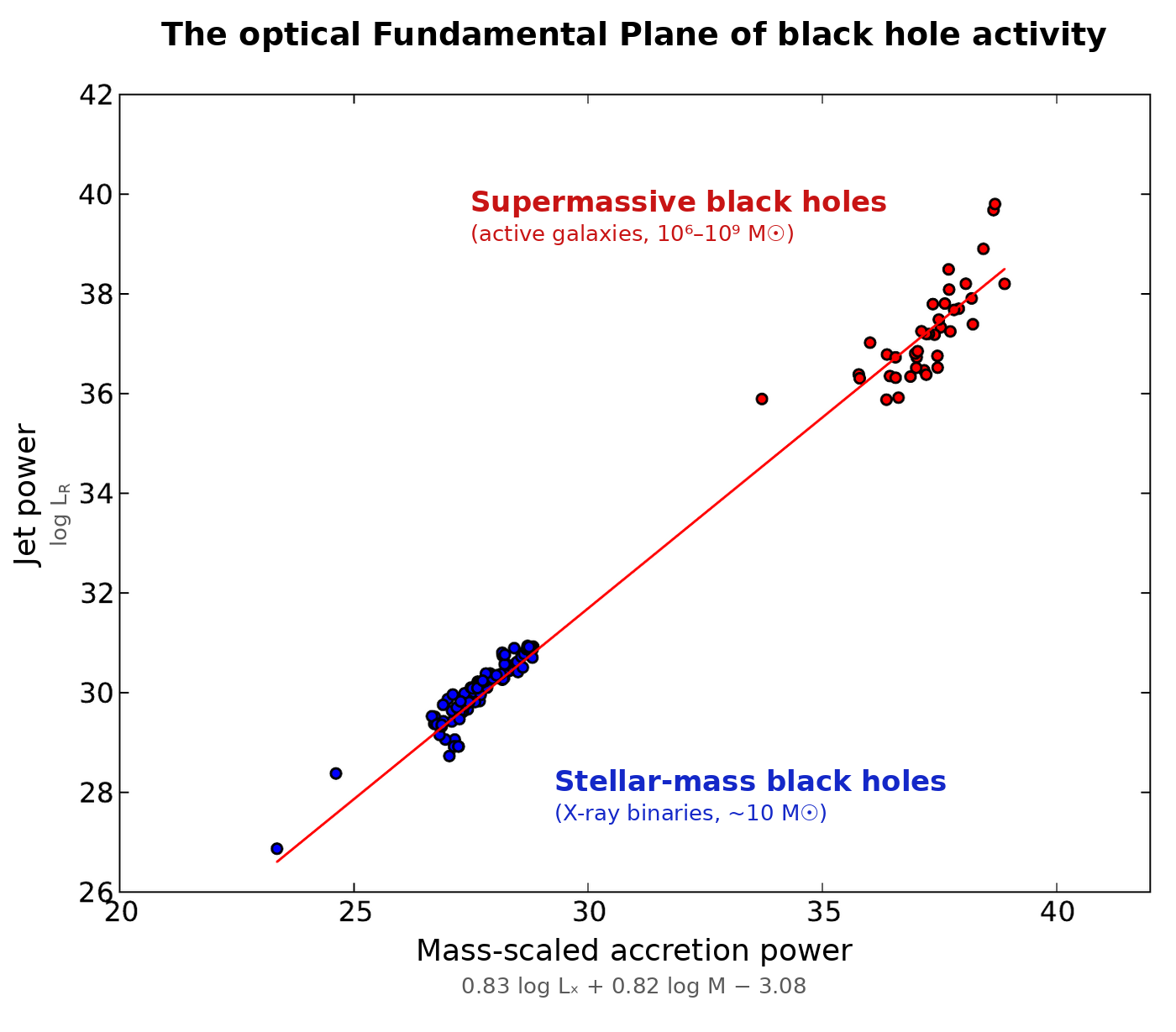
Black holes ranging from a few to billions of solar masses appear to feed and launch jets in much the same way. This apparent scale invariance allows each population to reveal what the other cannot. Millions of known supermassive black holes provide statistics that the few dozen known stellar-mass black holes cannot match. Stellar-mass black holes, in turn, let us follow entire cycles of activity over days to months—processes that could take millions of years in an active galaxy.
My research tests how far this shared behaviour extends, from accretion discs to jets. I discovered the optical Fundamental Plane, which links black hole mass to jet power, traced by radio emission, and accretion power, traced by the [O III] emission line, bringing X-ray binaries and active galaxies onto a common plane (Saikia et al. 2015). We have since found that accretion discs re-emit X-rays as optical light following a common relation across the black hole mass range (Cho et al. 2026). These similarities extend to jets: some stellar-mass black holes launch ejections with Lorentz factors of about 8, reaching speeds comparable to those in jets from supermassive black holes (Zhang et al. 2026).
Featured papers
-
The Fundamental Plane of black hole activity in the optical band
Saikia, Körding & Falcke 2015, MNRAS, 450, 2317 · arXiv:1504.00363
-
Jets from a stellar-mass black hole are as relativistic as those from supermassive black holes
Zhang, Yu, Carotenuto et al. (incl. Saikia) 2026, Nature Communications · arXiv:2504.11945
-
Scaling Up: A global optical/X-ray correlation for reprocessing across black hole masses
Cho, Russell, Sharma, Saikia et al. 2026 · arXiv:2610.17248 Preprint
Accretion Physics & Variability
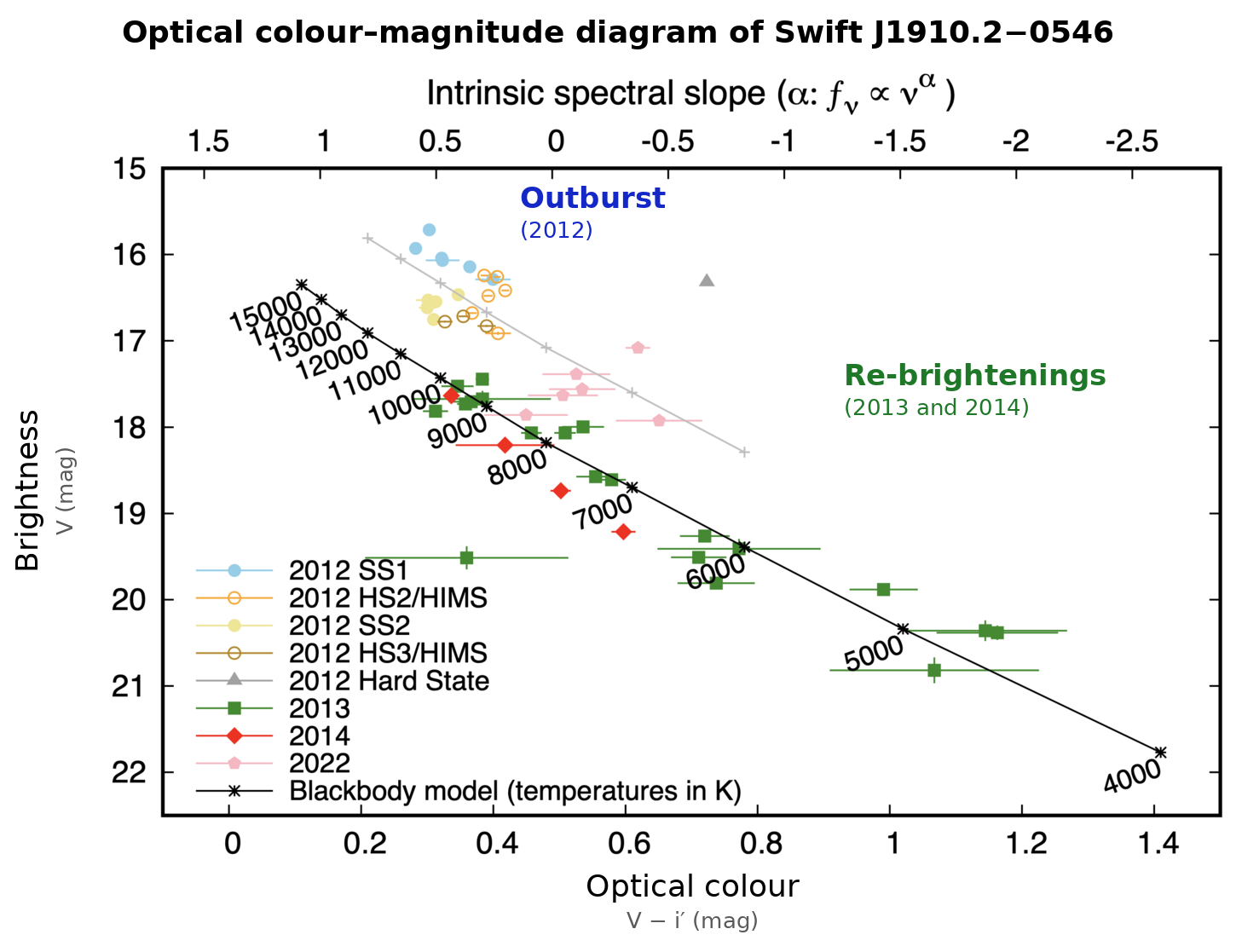
Accretion—the flow of matter onto a compact object—powers some of the brightest sources in the Universe. Yet how accretion discs transport matter, become unstable and sustain activity at very low luminosities remains poorly understood. Black hole and neutron star X-ray binaries let us follow these processes through bright outbursts, repeated brightenings and long periods of quiescence.
My research follows how accretion changes across this full cycle, using nearly three decades of optical monitoring with SMARTS and the Las Cumbres Observatory (LCO) network, combined with X-ray and radio data. In Aquila X-1, we showed that the optical rise consistently precedes the X-rays across 29 outbursts over 27 years, helping us trace how changes in the disc travel inwards. This evolution does not always end with a steady decline: in Swift J1910.2−0546, we found seven reflares and a mini-outburst, consistent with heating and cooling fronts repeatedly travelling through the disc (Saikia et al. 2023). We also investigate what happens once these brightenings end. In A0620−00 and MAXI J1820+070, optical colours, rapid variability and long-term changes in brightness allow us to probe the faint accretion flow that persists in quiescence.
Featured papers, by stage of activity
-
Outbursts
Exotic optical variability in the black hole X-ray binary IGR J17091−3624
Saikia et al. 2026, MNRAS · arXiv:2601.14540 Black hole
-
Rebrightenings
Saikia et al. 2023, ApJ, 949, 104 · arXiv:2304.02046 Black hole candidate
-
Quiescence
MAXI J1820+070 in quiescence
Saikia et al. In preparation Black hole
Jet Physics & Disc–Jet Coupling
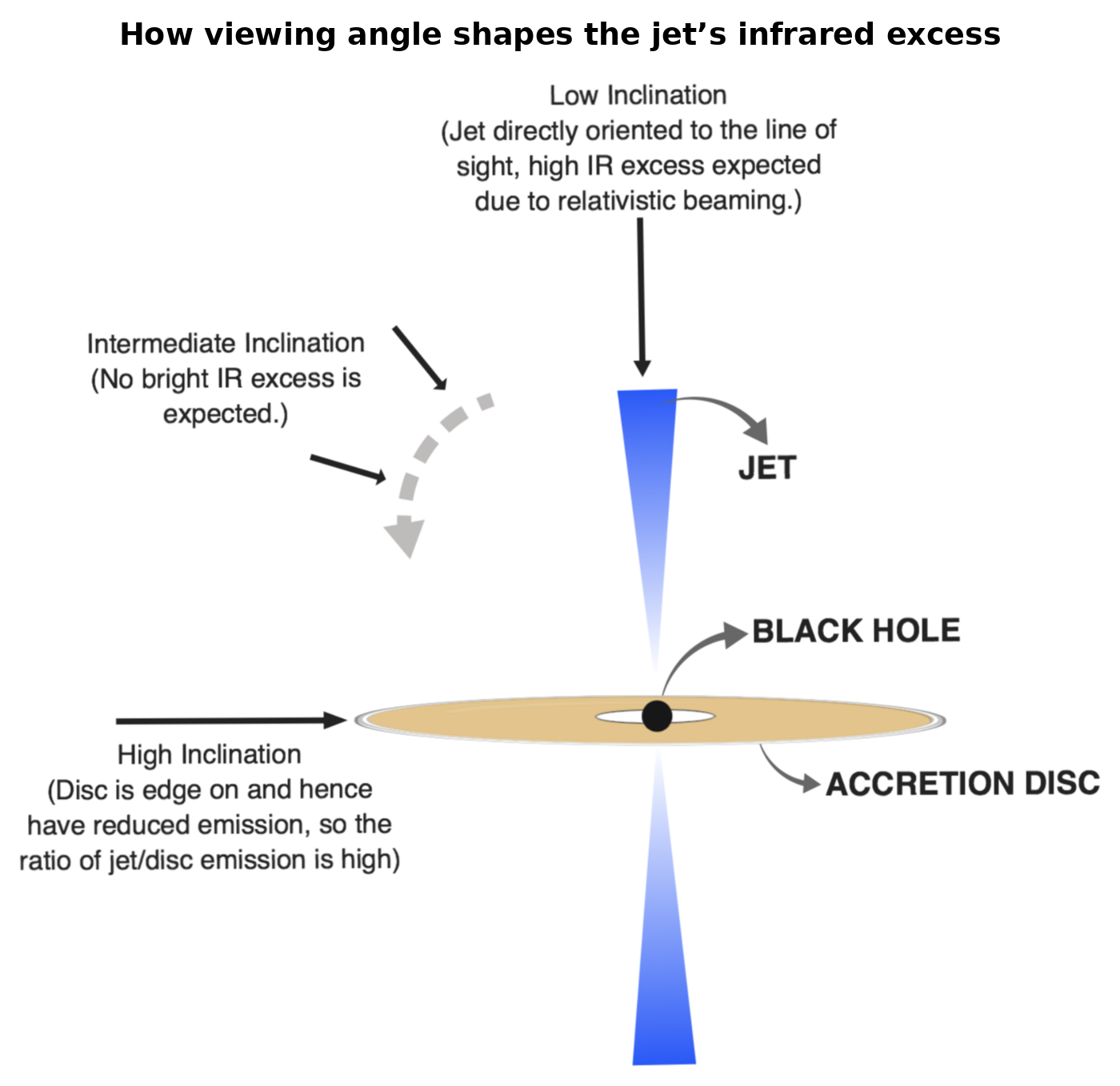
Relativistic jets carry a large share of the energy released by accretion back into their surroundings. Yet how they are launched, how fast they move and what switches them on and off remain open questions. Their speeds are especially difficult to measure because relativistic beaming changes how bright they appear depending on our viewing angle. Black hole X-ray binaries let us follow their evolution over days, as changes in the accretion flow cause jets to disappear and return.
I have developed new ways to measure jet speeds. Using the optical Fundamental Plane to estimate the intrinsic radio brightness of blazars, I showed that their Lorentz factors follow a power-law distribution (Saikia et al. 2016). In X-ray binaries, I showed that the infrared excess from the jet depends on our viewing angle, and used this to constrain compact-jet Lorentz factors, finding values between 1.3 and 3.5 (Saikia et al. 2019). We also track how jets respond to changes in the disc. In 4U 1543−47, we found that a compact jet briefly reappeared during the soft-intermediate state (Russell et al. 2020). Changes can also become visible just before a jet disappears: in MAXI J1807+132, we observed an optical polarization rotation of nearly 90 degrees shortly before the jet switched off (Rout et al. 2025).
Featured papers
-
Lorentz factor distribution of blazars from the optical Fundamental Plane of black hole activity
Saikia, Körding & Falcke 2016, MNRAS, 461, 297 · arXiv:1606.06147 Supermassive
-
Lorentz factors of compact jets in black hole X-ray binaries
Saikia et al. 2019, ApJ, 887, 21 · arXiv:1910.01151 Stellar-mass
Supermassive Black Holes & Galaxy Evolution
Most supermassive black holes in nearby galaxies, including our own, are only weakly active. These faint nuclei offer a way to study how black holes feed between their brightest phases and how their activity relates to the evolution of their host galaxies. Finding them can be difficult, because their light is easily hidden by dust or overwhelmed by stars. High-resolution radio imaging lets us see through the dust and isolate compact emission from the central black hole.
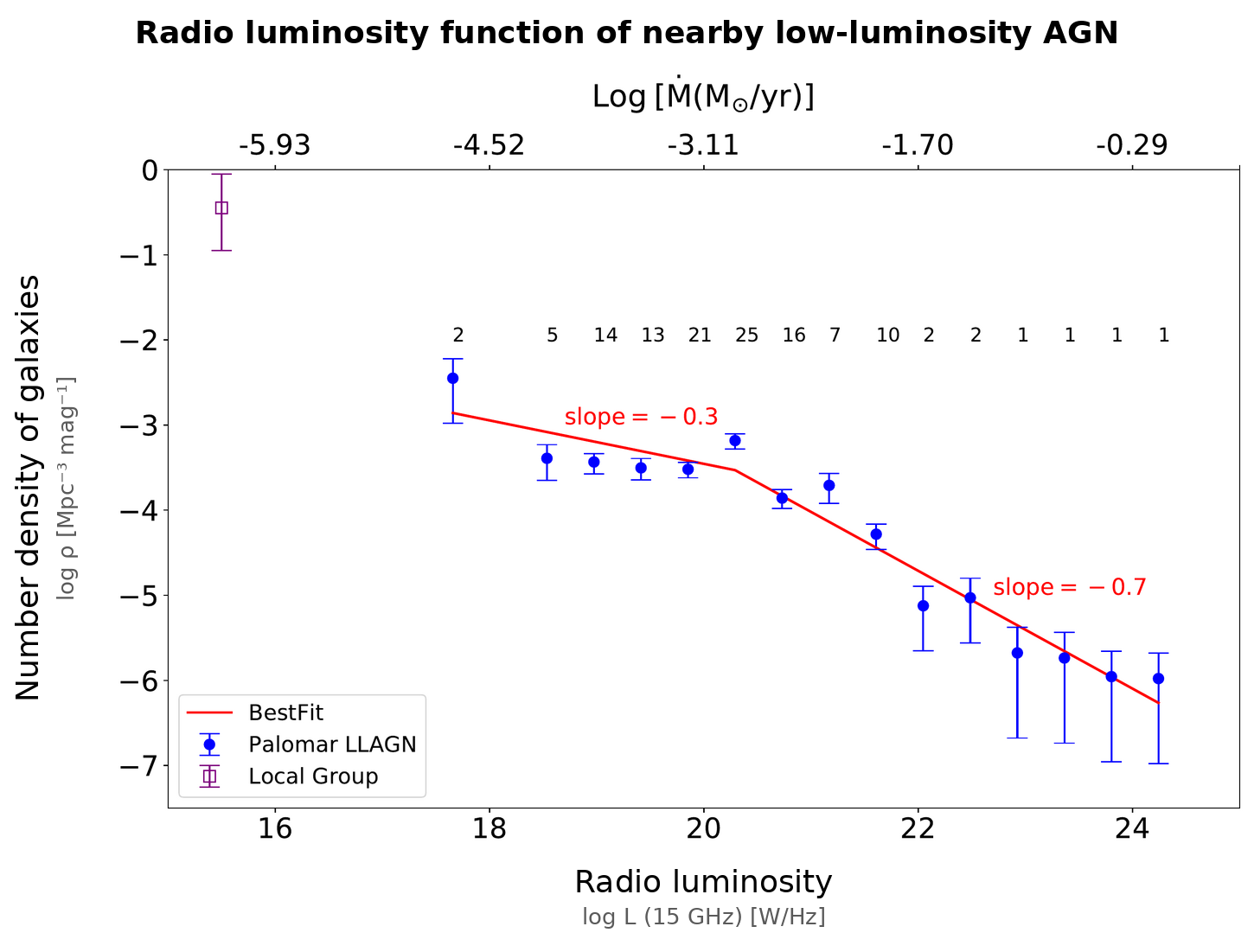
I use this approach to uncover black hole activity that other observations miss. With deep VLA observations at 15 GHz, I detected compact radio cores in about 60% of previously undetected nearby low-luminosity active galaxies, and found a break in their radio luminosity function at the faintest end (Saikia et al. 2018). Extending this census to the 280 nearby galaxies in the LeMMINGs survey, we find that up to 30% host a radio-active nucleus (Williams-Baldwin et al. 2026). I also investigate how this activity appears in more distant galaxies. In the JWST North Ecliptic Pole field, our VLBA imaging revealed 12 compact, black-hole-powered cores among 106 radio sources, uncovering clear signs of accretion even in radio-quiet galaxies (Saikia et al. 2025). Through the PEARLS programme, we use JWST to identify the galaxies hosting faint radio sources and examine how black hole activity relates to their transitions between star formation and quiescence (Willner et al. 2026; Bowling et al. 2026).
Featured papers
-
15-GHz radio emission from nearby low-luminosity active galactic nuclei
Saikia et al. 2018, A&A, 616, A152 · arXiv:1805.06696
-
Saikia et al. 2025 · arXiv:2506.18112
Outflows, Shocks & Feedback
Jets and winds do not just carry energy away from black holes and stars; they push into the surrounding gas, heat it and drive shocks. This feedback can shape star formation and the growth of galaxies, yet how much energy outflows actually return to their environment is hard to measure. Shocks offer a way in, because the radio emission from shocked gas records the energy and particles that outflows deposit.
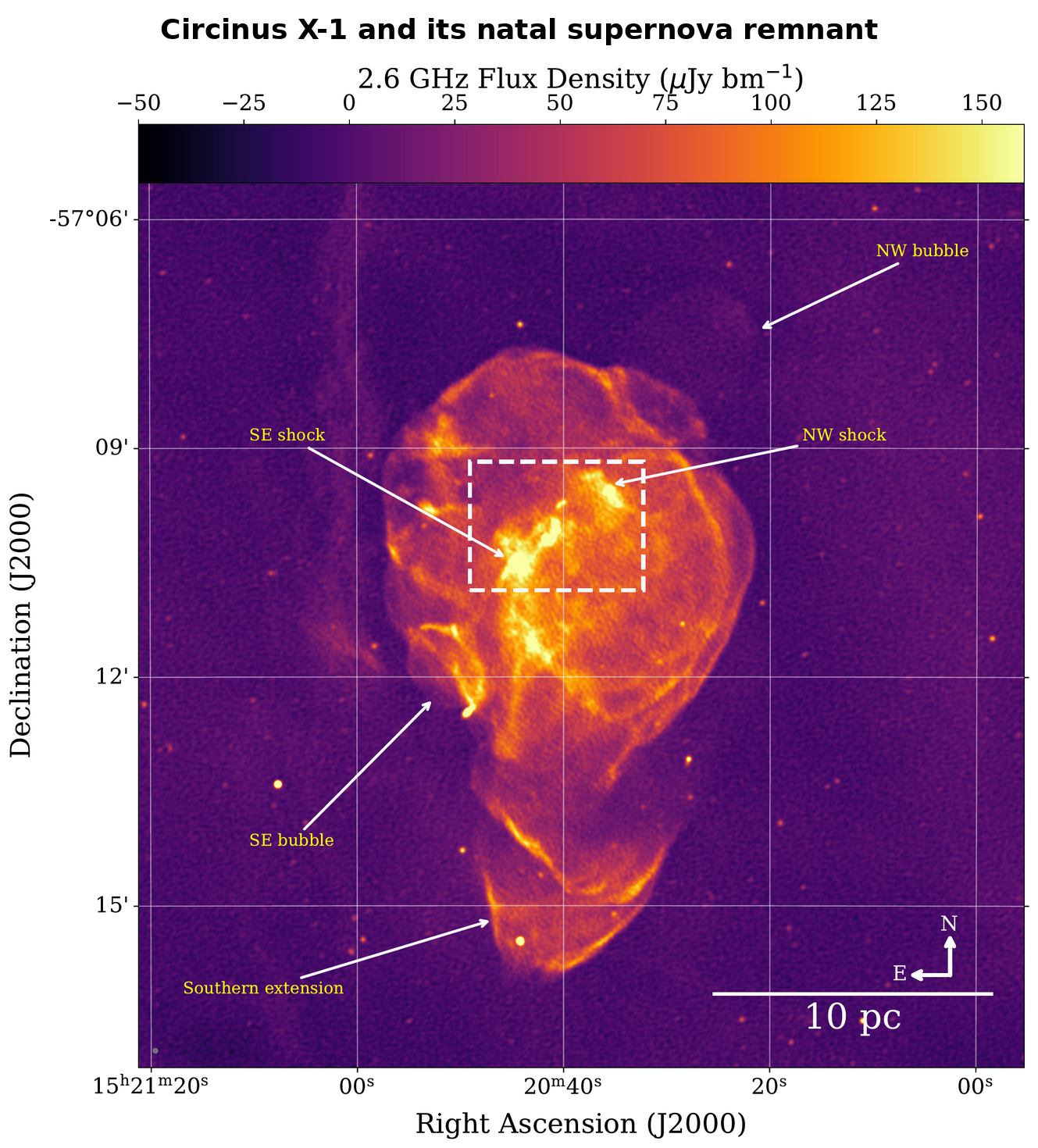
With MeerKAT, we made the first radio detection of the bow shock around the X-ray binary Vela X-1, and with ASKAP we expanded the sample of radio-detected bow shocks around runaway massive stars (van den Eijnden et al. 2022a, 2022b). In Circinus X-1, we traced precessing jets breaking out of the neutron star’s natal supernova remnant (Cowie et al. 2025, 2026; Gasealahwe et al. 2025). This interaction extends to galactic scales: in the dwarf galaxy NGC 4395, we found a weak radio jet aligned with shocked gas within about 10 parsecs of the black hole (Nandi et al. 2023).
Featured papers
-
Radio detections of IR-selected runaway stellar bow shocks
van den Eijnden, Saikia & Mohamed 2022, MNRAS, 512, 5374 · arXiv:2203.10842
-
Evidence for low-power radio jet–ISM interaction at 10 pc in the dwarf AGN host NGC 4395
Nandi et al. 2023, ApJ, 959, 116 · arXiv:2307.13263